
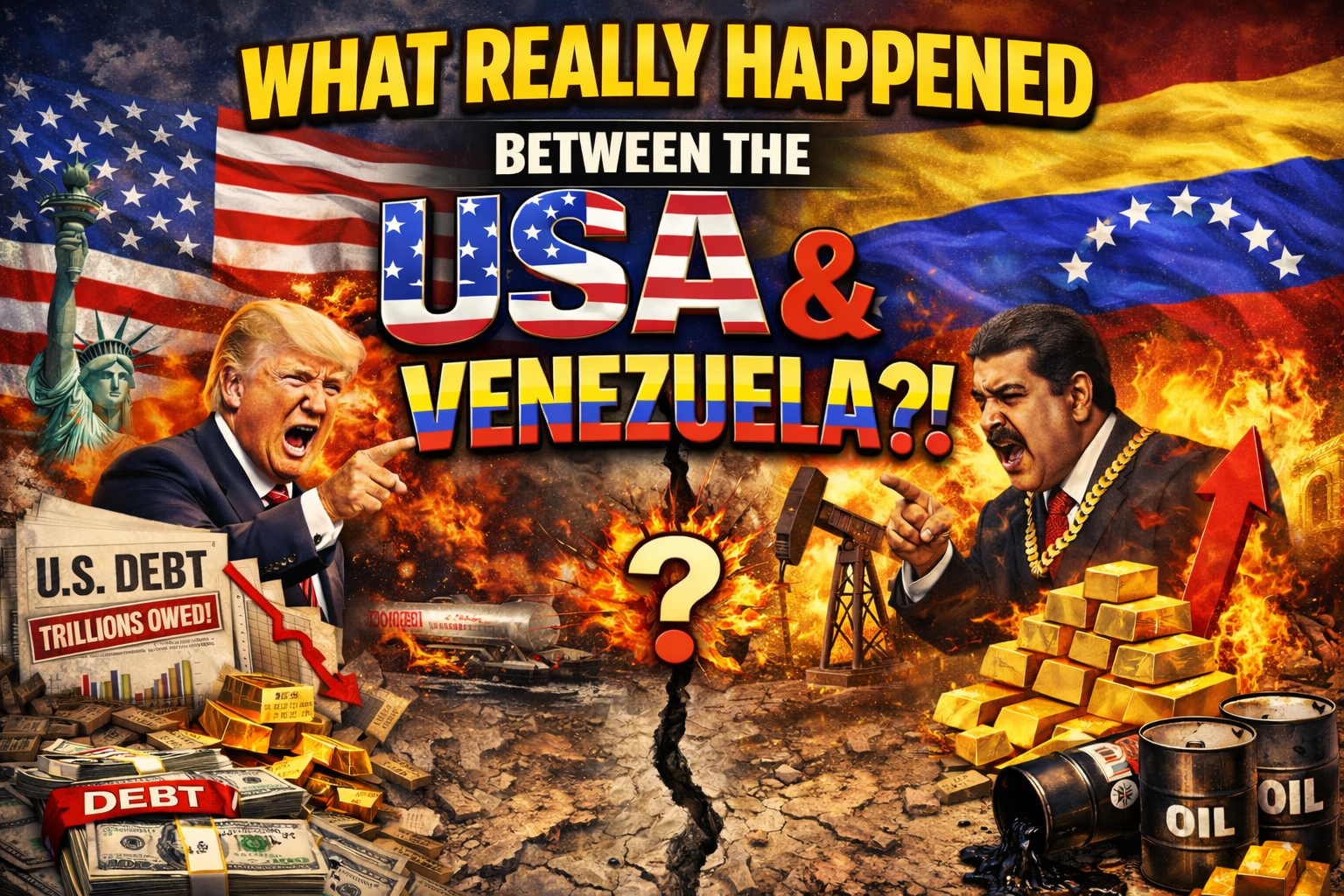
What Really Happened Between the USA and Venezuela?!
This isn’t just a war story. It’s a story about power, oil, money, and control and how one decision can shake the entire world.
On January 3, 2026, the world woke up to shocking news. The United States had carried out a sudden military operation inside Venezuela. Key locations were targeted and within hours, Venezuela’s President Nicolás Maduro and his wife were taken into U.S. custody.
What was presented as a security operation quickly became a global headline.
Officially, the U.S. said this move was about stopping drug trafficking, crime, and instability.
But behind the headlines lies a bigger picture:
Venezuela is not just another country. It sits on the largest oil reserves in the world, along with massive natural wealth.
Over the years, Venezuela moved closer to China, Russia, and the BRICS bloc, slowly drifting away from U.S. influence. For the U.S., this wasn’t just about security, it was about losing control in a region that matters economically and strategically.
The U.S. has made its intentions very clear.
It wants to run the transition in Venezuela, rebuild institutions, and most importantly take control of the oil system.
Why?
- Because controlling oil means controlling supply.
- And controlling supply means controlling prices.
This isn’t about ruling with soldiers, it’s about ruling with energy, money, and influence.
This conflict didn’t begin in 2026.
For decades:
- Venezuela resisted U.S. dominance.
- The U.S. imposed sanctions.
- Venezuela sold oil to rivals.
- Trust disappeared.
Each year, tensions quietly built up. This moment was not sudden, it was the breaking point.
How did oil prices come into the story? Here’s the simple logic:
- When oil supply is limited → prices go up.
- When oil supply increases → prices come down.
If Venezuelan oil is brought back aggressively into global markets, millions of barrels can flood supply. The U.S. has openly spoken about pushing a massive amount of oil into global markets - roughly 50 million barrels as an initial move, with more supply expected over time if Venezuelan production is restored.
More oil means cheaper energy, not just for the U.S., but for the world. Lower oil prices also hurt oil-dependent rivals strategically and economically.
And what about gold?
- Gold rises when people are afraid.
- Gold falls when people feel stable.
Right now, fear pushes gold higher. But if energy prices fall and markets calm down, investors slowly move away from gold back into growth assets.
So controlling oil indirectly helps cool down gold prices too.
Moreover, The United States currently carries over $34 trillion in national debt.
- Cheaper oil helps reduce inflation.
- Lower inflation helps stabilize interest rates.
- Stable rates make debt easier to manage.
Why is The U.S. doing all of this? In simple words:
Because America is under financial pressure.
- The U.S. has massive debt.
- Inflation has hurt households.
- Interest costs are rising.
- And global influence is slowly being challenged by other powers.
Trump’s thinking is straightforward:
- If you control energy, you control inflation.
- If you control inflation, you control interest rates.
- If you control interest rates, you control debt.
Venezuela fits perfectly into this plan.
- It has huge oil reserves sitting unused.
- Bringing that oil into the market helps make energy cheaper.
- Cheaper energy cools inflation.
- Lower inflation reduces pressure on U.S. debt.
At the same time, flooding oil weakens rival oil-producing nations and limits the financial strength of countries that challenge U.S. dominance. Gold prices falling sends another message that fear is reducing and the system is stabilising.
In short, this isn’t about one country. It’s about protecting the U.S. economy, strengthening the dollar, and maintaining global control.
Everything else - security, drugs, democracy is part of the story told to justify the move.
What does this mean for markets?
Markets don’t react to emotions, they react to power shifts.
- Oil becomes volatile.
- Gold reacts to fear and calm.
- Currencies adjust.
- Investors reposition money globally.
So, as an investor:
Don’t panic.
Don’t ignore it.
Understand that geopolitics moves markets faster than fundamentals. Stay diversified. Watch energy and inflation trends closely.
The goal isn’t prediction - it’s preparation.
This isn’t just about Venezuela. It’s about who controls energy, money, and the future.
DM me to know more or Follow me for more simple stories behind complex global events.